15 Common Painting Mistakes (And How to Avoid Them)
Avoid costly painting mistakes. Learn the most common DIY painting errors and how to fix them. Tips from professional painters.
Paint is unforgiving in one specific way: every mistake stays visible. A bad brush stroke, a skipped prep step, a rushed coat — you'll see it every time the light hits that wall from the wrong angle. Your mother-in-law won't say anything, which is worse than if she did. These 15 mistakes are the ones that separate work that looks hired from work that looks attempted.
1. Skipping Primer
Primer costs $20. Your topcoat costs $60. When you skip primer on new drywall, dark colors, or stained surfaces, you're asking a $60 product to do a $20 job — and it won't. The paint soaks into bare drywall unevenly, dark colors bleed through white, and stains ghost through in months. Paint companies push 'paint and primer in one' but that only works on already-painted walls in good condition with a similar color. Any other situation: prime first. The cheapest primer saves you the most expensive paint.
2. Not Cleaning the Walls
Paint bonds to what's on the wall, not the wall itself. If what's on the wall is cooking grease, dust, hairspray, and kid handprints, your paint is bonding to a layer of grime that will separate from the actual surface. Kitchens and bathrooms are the worst — years of aerosolized grease and soap scum. TSP cleaner takes 20 minutes and costs $5 for a box that does multiple rooms. You don't need surgical sterility. You do need walls that aren't oily to the touch.
3. Using Cheap Brushes
A $2 chip brush from the bargain bin sheds bristles into your wet paint and leaves brush strokes deep enough to cast shadows. A quality 2.5-inch angled sash brush from Purdy or Wooster costs $12-15 and — if you clean it properly — lasts through dozens of rooms. Cheap brushes also hold less paint per dip, meaning more trips to the can, more fatigue, and more opportunity for drips. The brush is the single worst place to save $10.
4. Not Using Painter's Tape
Pro painters can cut a clean line freehand because they've done it 10,000 times. You haven't. Taping trim, ceiling edges, and baseboards takes 30-45 minutes. Touching up paint that bled onto your white trim takes hours and never looks right — you end up with a wavy line where two colors meet. FrogTape's edge-seal technology actually works: moisture in the paint activates a gel that seals the tape edge. Pull while the paint is slightly wet — dry paint can tear off in sheets with the tape, leaving a ragged torn edge.
5. Painting Over Dry Edges
You must maintain a 'wet edge' — always loading paint next to paint that hasn't dried yet. When you let a section dry and then roll into it, the overlap creates a visible line called a lap mark. It's a stripe of doubled-up paint that catches the light differently and can't be fixed without repainting the whole wall. Work wall by wall, end to end, don't stop in the middle. If you need a break, finish at a corner. The wet edge is the difference between a uniform wall and a stripey mess.
6. Overloading the Roller
Dip the roller in the tray, roll it back and forth on the ridged ramp until the entire surface is evenly loaded but not dripping. If paint runs down the wall in streams or you hear a wet squelching sound while rolling, you've overloaded. Too much paint creates an orange-peel texture, sagging runs, and puddles that dry unevenly. The right amount leaves a uniform coverage that self-levels flat as it dries. You should reload the roller when it starts to drag and makes a sticky sound — not when it's bone dry.
7. Not Stirring the Paint
Paint separates in the can. Solids, pigments, and binders settle to the bottom. Pour from an unstirred can and the first half of the gallon is watery, thin garbage that barely covers. The bottom half is a thick paste that won't roll out smoothly. Stir every can — including brand new cans straight from the store — with a wooden stirring stick for a full minute. If you're using multiple gallons of the same color, pour them all into a 5-gallon bucket and mix together — this is called 'boxing' and eliminates batch-to-batch color differences that are invisible in the can but obvious on the wall.
8. Wrong Roller Nap
Roller nap is the thickness of the fuzzy cover. 3/8-inch nap is for smooth drywall — the standard choice. 1/2-inch is for lightly textured walls (orange peel, knockdown) because the longer fibers reach into the texture valleys. 3/4-inch and thicker is for stucco, brick, and heavily textured surfaces. Use a thick nap on a smooth wall and you waste paint into deeper fibers and leave heavy stipple marks. Use a thin nap on a textured wall and you'll press the roller so hard your arm cramps up — and still miss spots in the low points.
9. Painting in Wrong Temperatures
Interior latex paint works best between 50°F and 85°F (10°C-29°C). Below 50°, the paint won't coalesce properly — it can stay tacky for days and may never fully cure. Above 85°, the paint skins over before it levels, trapping brush strokes and roller texture permanently in the dried film. Humidity above 70% dramatically slows dry time and can cause 'blushing' — a cloudy white haze on dark colors from moisture trapped in the curing paint film. Check the weather, close the windows if needed, and don't paint a room that's freezing or sweltering.
10. Rushing Between Coats
Every paint can lists a recoat time on the label. Latex paint typically needs 2-4 hours. Oil-based: 24 hours. 'Dry to the touch' is not the same as 'ready for another coat.' When you recoat too soon, the solvent in the second coat reactivates the partially-cured first coat. The roller picks up and drags the first coat, creating clumps, bare spots, and terrible adhesion between layers. Wait the full time on the can. In high humidity, add at least an extra hour. If you can dent the paint with a fingernail, it's not ready.
11. One Thick Coat Instead of Two Thin
A heavy coat sags, drips, and forms vertical runs called 'curtains.' It takes 3-4 times longer to dry and never levels properly because the surface skins over while the body is still wet. Two thin coats dry faster, level flatter, and give better hiding because the second coat fills the micro-gaps the first coat left. The first coat should look slightly translucent and streaky — that's normal and correct. The second coat fills it in. If your first coat looks 100% perfect, you probably applied it too thick, and you'll see sags when you come back.
12. Not Protecting Floors
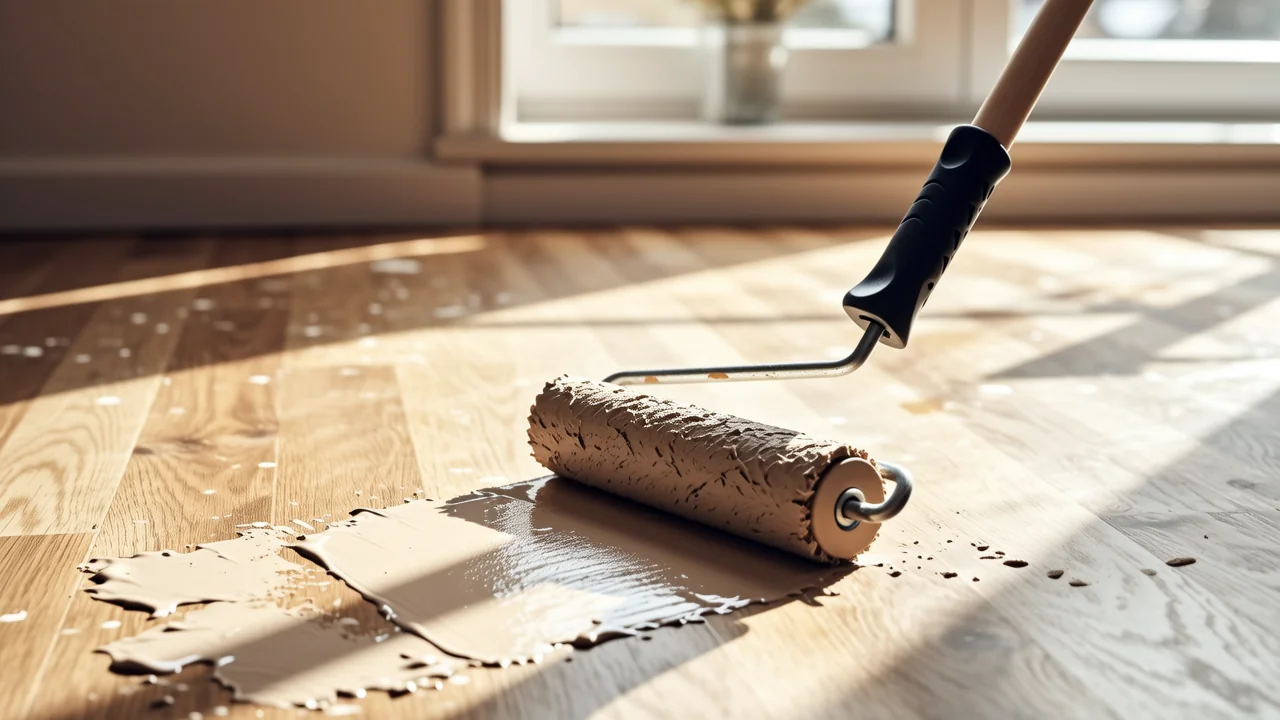
Canvas drop cloths cost $15 and last for decades of projects. Plastic sheeting is slippery, won't absorb paint drips, and turns every spill into a tracking hazard that paints footprints across your house. Protect the floor fully — overlap drop cloth sections by at least 6 inches and tape them to the baseboards with painter's tape. Paint splatter travels farther than you think, and once latex paint dries on hardwood or carpet, removal ranges from 'annoying scraping' to 'replace the flooring.'
13. Painting Over Wallpaper
Never do this. The moisture from latex paint soaks through the wallpaper and reactivates the adhesive underneath. Bubbles form at the seams. Edges curl. Even if it looks passable on day one, failure is guaranteed within 6-12 months. Removing painted-over wallpaper is an order of magnitude harder than removing unpainted wallpaper. Strip it properly: score the surface with a scoring tool, apply wallpaper remover solution (DIF or fabric softener + hot water), let it soak in, scrape with a wide putty knife. Then wash the walls to remove all adhesive residue, prime, and paint.
14. Wrong Finish for the Room
Finish choice isn't aesthetic — it's functional. Flat paint on bathroom walls absorbs moisture and can't be cleaned — every water spot or toothpaste splatter is permanent. High-gloss on bedroom walls creates glare spots that highlight every drywall imperfection and look like a gym locker room. The right choices: kitchens and bathrooms get satin or semi-gloss (scrubbable, moisture-resistant), living rooms and bedrooms get eggshell (washable enough, no glare), ceilings get flat (hides imperfections, no light reflection), trim and doors get semi-gloss (durable, easy to wipe down).
15. Not Buying Enough Paint
Running out of paint mid-wall is the most expensive way to save $30. You drive back to the store, they mix a new gallon. Even if the machine uses the exact same formula, slight variations in tint base lot, mix time, or colorant calibration can create a visible difference from your first batch. Now you have a 3-foot stripe of slightly different color on your wall that you'll never unsee. Always buy 10-15% more than your calculation says. Leftover paint stores for years in a sealed can. Store it upside down to create an air-tight seal with the paint itself.
The One Rule That Covers Everything
If you remember exactly one thing from this list: prep harder than you paint. The vast majority of the mistakes above — skipping primer, not cleaning, bad taping, poor patching, wrong tools — are all prep failures. The actual painting portion of any job is the easy, fast part. Twenty minutes of prep saves two hours of fixing dried paint mistakes. Pros spend 60-70% of a job's time on prep. DIYers who get the best results figured out the same ratio. Spend your time where it actually matters: before the can is open.