Low-VOC & Zero-VOC Paint: What You Need to Know
Complete guide to low-VOC and zero-VOC paints. Compare brands, costs, performance, and learn about VOC safety standards.
That 'fresh paint smell' isn't fresh — it's volatile organic compounds evaporating into the air you're breathing. VOCs cause headaches, dizziness, and throat irritation in the short term. Long-term exposure has been linked to damage to the liver, kidneys, and central nervous system. EPA studies show indoor VOC levels can spike 2-5 times above outdoor levels after painting and stay elevated for weeks. Low-VOC and zero-VOC paints have become genuinely good in the last five years — they don't cost much more than standard paint, perform nearly as well, and don't make your house smell like a chemical plant.
What Are VOCs and Why Should You Care?
VOCs (volatile organic compounds) are carbon-based chemicals that vaporize at room temperature. In paint, they're the solvents that keep the paint liquid in the can and help it flow onto the wall during application. As the paint dries, those solvents evaporate — that's the smell. The off-gassing continues at lower levels for months after the paint feels dry, not just the first few days when the smell is strongest.
- Formaldehyde, benzene, toluene, and xylene are the primary VOC offenders in standard interior paint. All of them are classified as known or probable human carcinogens.
- Short-term effects: Headaches, eye and throat irritation, nausea, dizziness, and difficulty breathing. Painters who work without ventilation develop a tolerance to these symptoms — that's not a good thing, it means their body has stopped warning them about ongoing exposure.
- Long-term risks: The EPA links chronic VOC exposure to liver and kidney damage, central nervous system effects, and certain cancers. Children, elderly people, pregnant women, and anyone with asthma or chemical sensitivities are the most vulnerable.
- Indoor concentration spike: The EPA found that indoor VOC levels can be 2-5 times higher than outdoor levels for days after painting — and up to 1,000 times higher during and immediately after application. Opening a window helps but doesn't eliminate the problem.
- Regulatory limits: The EPA's Architectural Coatings Rule (1999) caps flat interior paint at 250 g/L and non-flat at 380 g/L. California's CARB limits are the most stringent in the U.S. — and most 'low-VOC' paints are formulated to meet those stricter standards.
Low-VOC vs Zero-VOC vs Standard Paint
The labels are inconsistent between brands and often misleading. Here's what each category actually means in terms of chemistry and real-world impact:
- Standard latex paint: 250-380 g/L (grams per liter) of VOCs. This is legal and standard for most wall paints on the market. The smell is strong and lingers for days to weeks.
- Low-VOC paint: Under 50 g/L. This is where most major brands' premium interior lines now sit. Green Seal GS-11 certification requires under 50 g/L for flat paint and under 150 g/L for non-flat paint. The smell is mild and typically clears within hours.
- Zero-VOC paint: Under 5 g/L. No paint is truly zero VOC — even water contains trace VOCs. Under 5 g/L is considered effectively VOC-free. Minimal to no smell. Safe to use in occupied homes without vacating.
- Natural paints: Made from plant oils, clay, chalk, milk protein, and natural mineral pigments. Brands like BioShield and ECOS. Near-zero VOCs naturally, not through chemical substitution. Limited color palette and slightly different application characteristics.
| Type | VOC Level | Odor Duration | Price/Gal | Best Use Case |
|---|---|---|---|---|
| Standard latex | 250-380 g/L | Strong, days to clear | $25-45 | Well-ventilated exteriors, garages |
| Low-VOC | < 50 g/L | Mild, hours to clear | $35-55 | Living areas, hallways, offices |
| Zero-VOC | < 5 g/L | Minimal to none | $45-75 | Bedrooms, nurseries, occupied homes |
| Natural paint | Near zero | None | $55-90 | Chemical sensitivities, hospitals |
Best Low-VOC Paint Brands in 2026
These are the brands and product lines that test well for low VOCs without sacrificing the coverage, durability, and color selection you need:
- Benjamin Moore Natura: Zero-VOC (< 5 g/L). 400+ sq ft coverage per gallon. Self-priming on most previously painted surfaces. Available in all 3,500+ Benjamin Moore colors. The best overall low-VOC paint by professional standards. Approx $65-75/gal.
- Sherwin-Williams Harmony: Zero-VOC. 350-400 sq ft coverage. Contains odor-eliminating technology that actually reduces existing household odors from cooking, pets, and smoke — it keeps working after the paint dries. Good for kitchens and odor-prone areas. Approx $60-70/gal.
- Behr Premium Plus (Home Depot): Low-VOC (< 50 g/L). GREENGUARD Gold certified. The best value low-VOC option. 250-400 sq ft coverage depending on color. Frequently on sale for $28-35/gal, which makes it cheaper than many standard paints.
- ECOS Paints: Zero-VOC. Ultra-low-chemical formulation designed specifically for people with chemical sensitivities, allergies, and respiratory conditions. Used in hospitals, schools, and sensitive environments. Limited distribution but available online. Approx $60-90/gal.
- Clare Paint: Zero-VOC. GREENGUARD Gold certified. Direct-to-consumer brand with a curated color palette (about 60 colors). Easy online ordering with peel-and-stick color samples shipped to your door. More expensive per sq ft than big-box brands. Approx $55-65/gal.
- AFM Safecoat: Zero-VOC across the entire product line, including primers and specialty coatings. Formulated for chemically sensitive individuals and those with Multiple Chemical Sensitivity (MCS). Used by environmentally conscious builders. Approx $55-75/gal.
| Brand | VOC Level | Coverage | Price/Gal | Best For |
|---|---|---|---|---|
| BM Natura | Zero (< 5 g/L) | 400+ sq ft | $65-75 | Best overall, any room |
| SW Harmony | Zero (< 5 g/L) | 350-400 sq ft | $60-70 | Kitchens, odor-prone spaces |
| Behr Premium Plus | Low (< 50 g/L) | 250-400 sq ft | $28-35 | Budget-friendly, rentals |
| ECOS | Zero (< 5 g/L) | 350-400 sq ft | $60-90 | Sensitivities, nurseries |
| Clare | Zero (< 5 g/L) | 300-350 sq ft | $55-65 | Designer colors, easy shopping |
| AFM Safecoat | Zero (< 5 g/L) | 300-350 sq ft | $55-75 | MCS, allergy-sensitive homes |
Does Low-VOC Paint Perform as Well?
The short answer: premium zero-VOC paints now perform at parity with premium standard paints. The cheap stuff still lags. Here's the breakdown:
- Coverage: Zero-VOC paints from top brands (Natura, Harmony, ECOS) match or exceed standard paint coverage at 350-400 sq ft per gallon. The solids content — what actually becomes your paint film — is equivalent. They replaced the VOCs with water and safer coalescing agents, not with nothing.
- Durability and washability: Premium zero-VOC lines scrub equally well as premium standard lines. Budget low-VOC paints cut corners on both — you're paying for the low-VOC chemistry, so at low price points, performance gets sacrificed to keep the bill of materials profitable. At $45+/gal, durability concerns disappear.
- Color retention: No difference. VOCs have nothing to do with pigments. A zero-VOC deep navy blue holds its color in direct sunlight exactly as long as a standard formulation. UV resistance comes from the pigment quality, not the solvent package.
- Application feel: Low-VOC paints dry slightly faster because there's less solvent that needs to evaporate. This means you need to maintain a wet edge more diligently — work faster and don't stop mid-wall. The paint also tends to be slightly thinner in consistency, which takes about 10 minutes of rolling to adjust to.
- The trade-off: Dark-to-light color changes or very saturated colors (deep reds, bright yellows) may need one extra coat with some low-VOC formulations. The thinner consistency means slightly less hide per coat. Budget for 3 coats instead of 2 on these edge cases, and you'll be fine.
When Low-VOC Is Worth the Extra Cost
Low-VOC paint costs $10-30 more per gallon than a comparable standard paint. For a 2-gallon bedroom job, that's $20-60 extra — less than a single dinner delivery order. Here's when spending that money is a no-brainer:
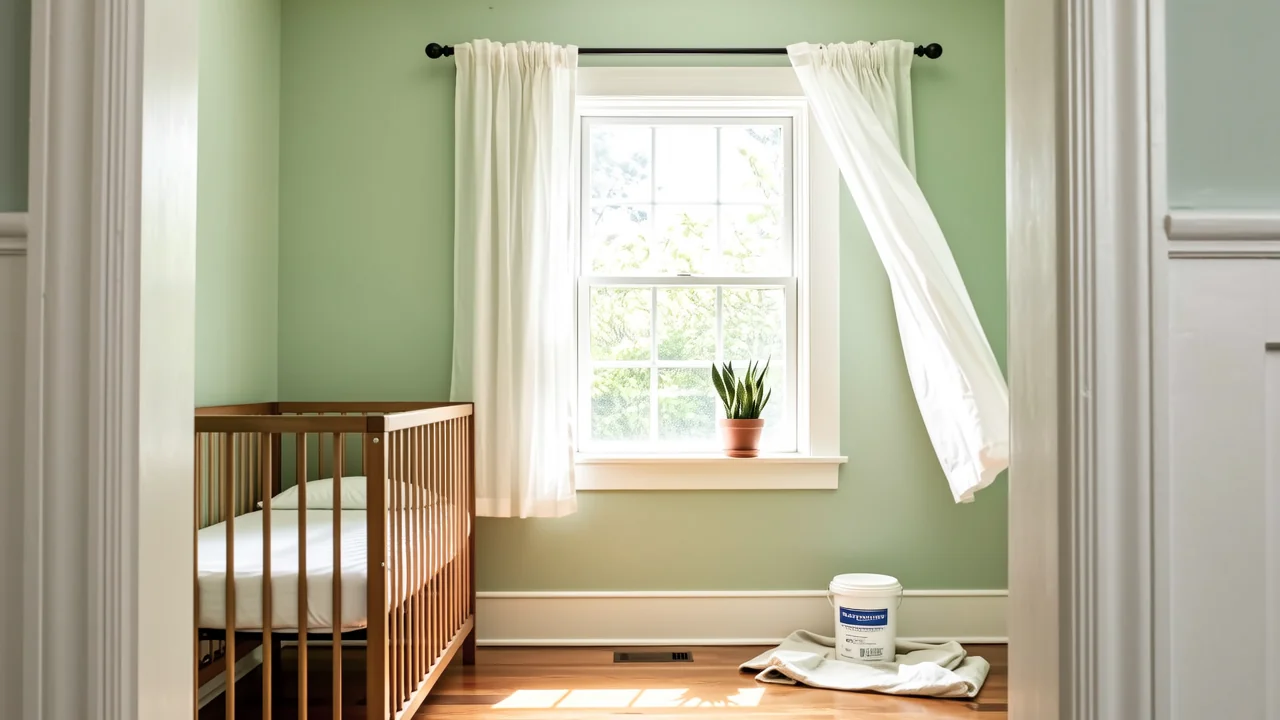
- Bedrooms and nurseries: You spend 7-9 hours a night breathing bedroom air. Infants and young children are more susceptible to respiratory irritants due to smaller body mass and developing lungs. Zero-VOC in nurseries is not a luxury — it's basic precaution.
- Painting in an occupied home: If you're living and sleeping in the house during and after painting, low-VOC means you don't need to vacate the room for days or sleep with the windows open in January.
- Winter painting: When outdoor temperatures force you to keep windows closed, VOC concentration builds up dramatically. Low-VOC + a box fan pointed out a cracked window handles the minimal off-gassing.
- Sensitive occupants: Anyone with asthma, allergies, migraines triggered by smells, or diagnosed chemical sensitivity. The $40 premium across a room is trivial compared to days of health problems.
- Shared ventilation buildings: Apartments, condos, and townhouses share air through connected HVAC and wall penetrations. VOCs from your painting project affect neighbors. Low-VOC is the considerate choice.
- When you can skip it: Exterior painting (VOCs dissipate into open air), detached garages with doors open, investment flips where you won't be living during the off-gassing window, and storage areas with minimal occupancy.